From waste to architecture: Aectual joins global climate leaders in New York
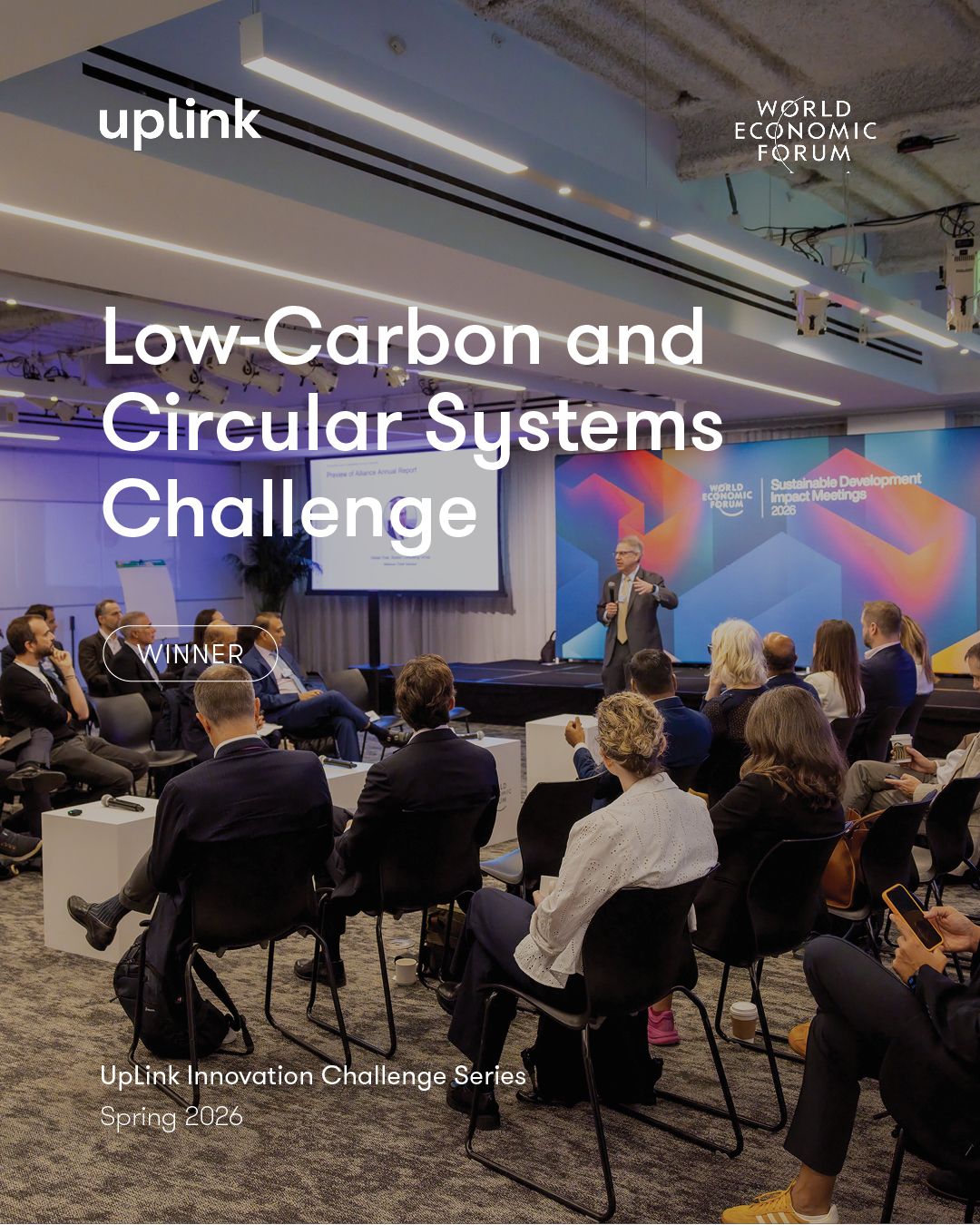
Aectual has been named one of 12 winners of the World Economic Forum’s UpLink Low-Carbon and Circular Systems Challenge, selected from 153 submissions worldwide. The challenge recognizes solutions that help companies reduce emissions across their value chains and accelerate the transition towards low-carbon, circular systems.
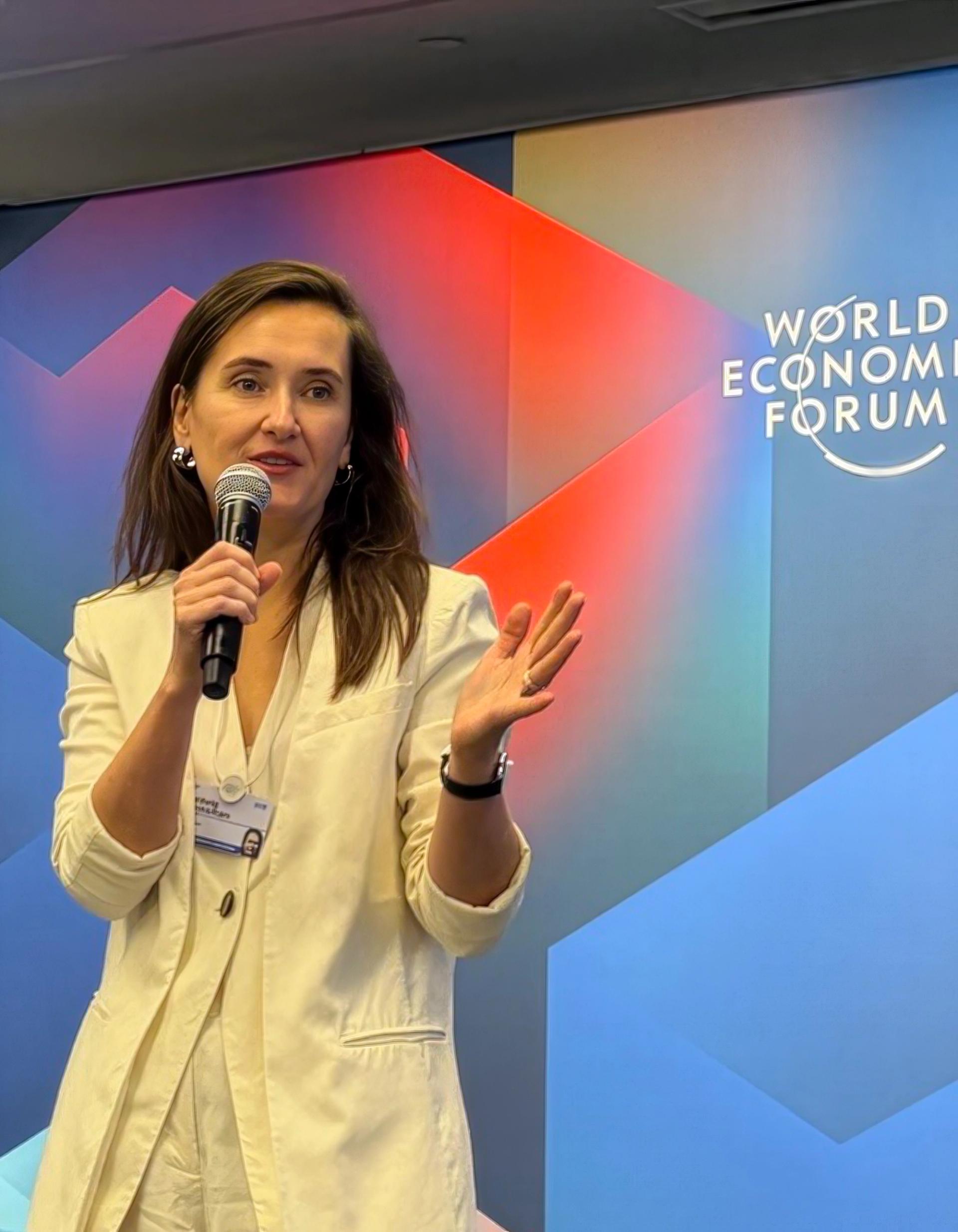
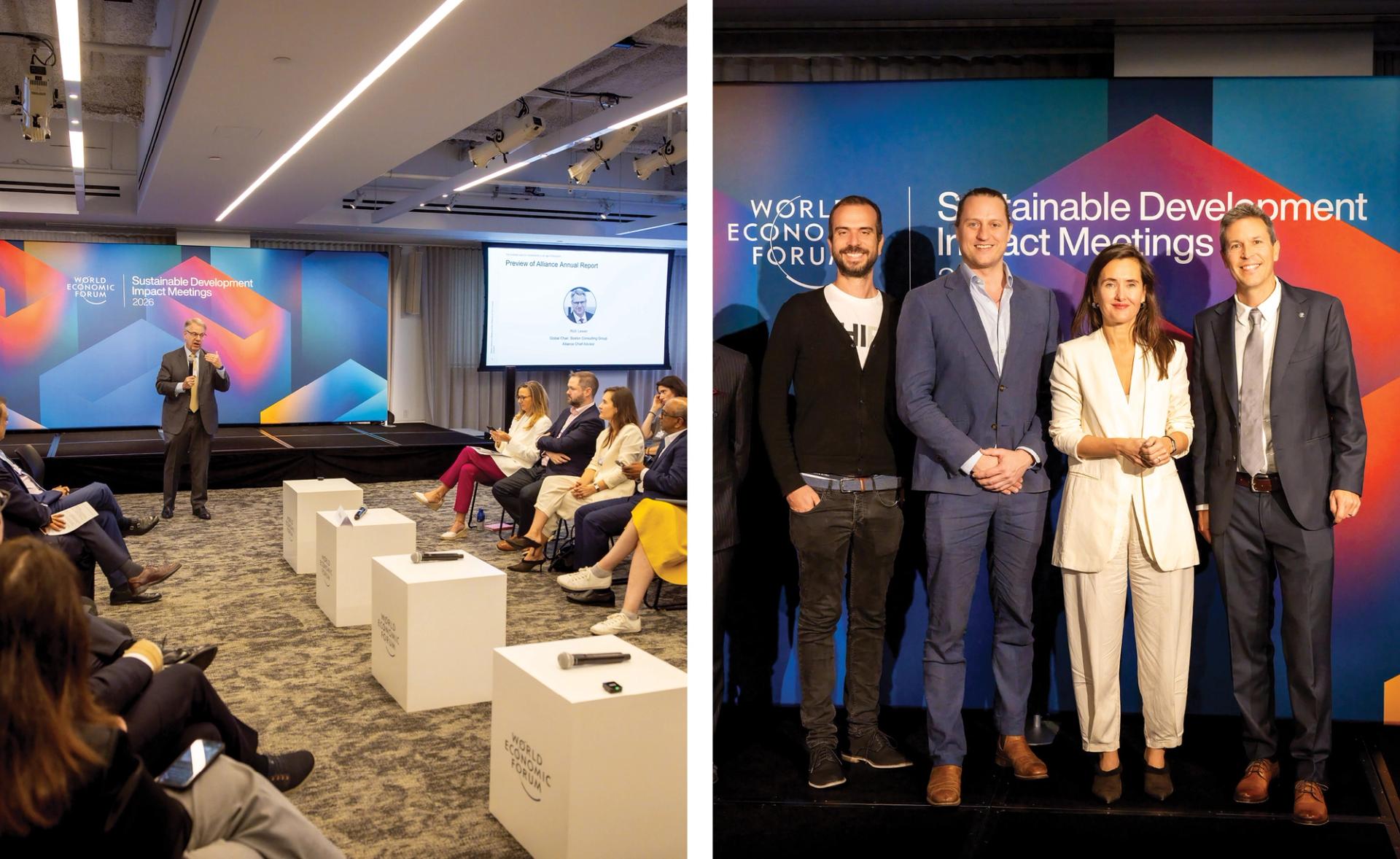
The winners were announced during Climate Week in New York, where Aectual co-founder and architect Hedwig Heinsman presented our approach to circular architecture at the Senior Advisory Meeting of the World Economic Forum’s Alliance of CEO Climate Leaders.
The meeting brought together CEOs and climate leaders to discuss green growth and the road to COP31, including Juvencio Maeztu, CEO and President of Ingka Group (IKEA), Rich Lesser, Global Chair of BCG, Sumant Sinha, CEO of ReNew, and Atul Arya, Chief Energy Strategist at S&P Global, alongside senior leadership from the World Economic Forum.
Hedwig opened with something everyone around the table had in common: an office.
Offices -just like stores, hotels and other commercial buildings- are filled with interiors that are designed, installed, used and eventually replaced. These constant cycles of renovation create enormous material flows that are still largely linear.
Aectual is working to change that.
From interiors to material banks
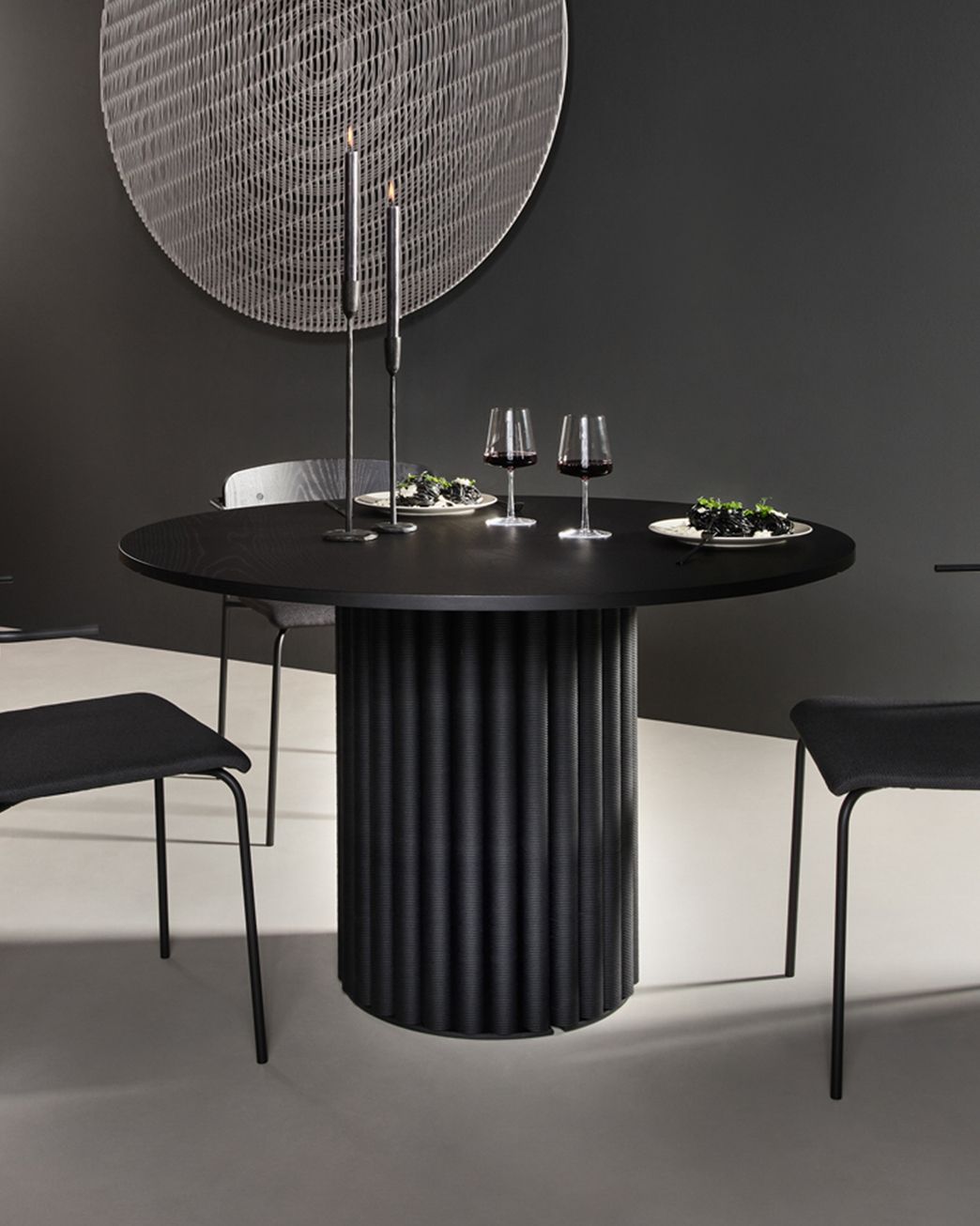
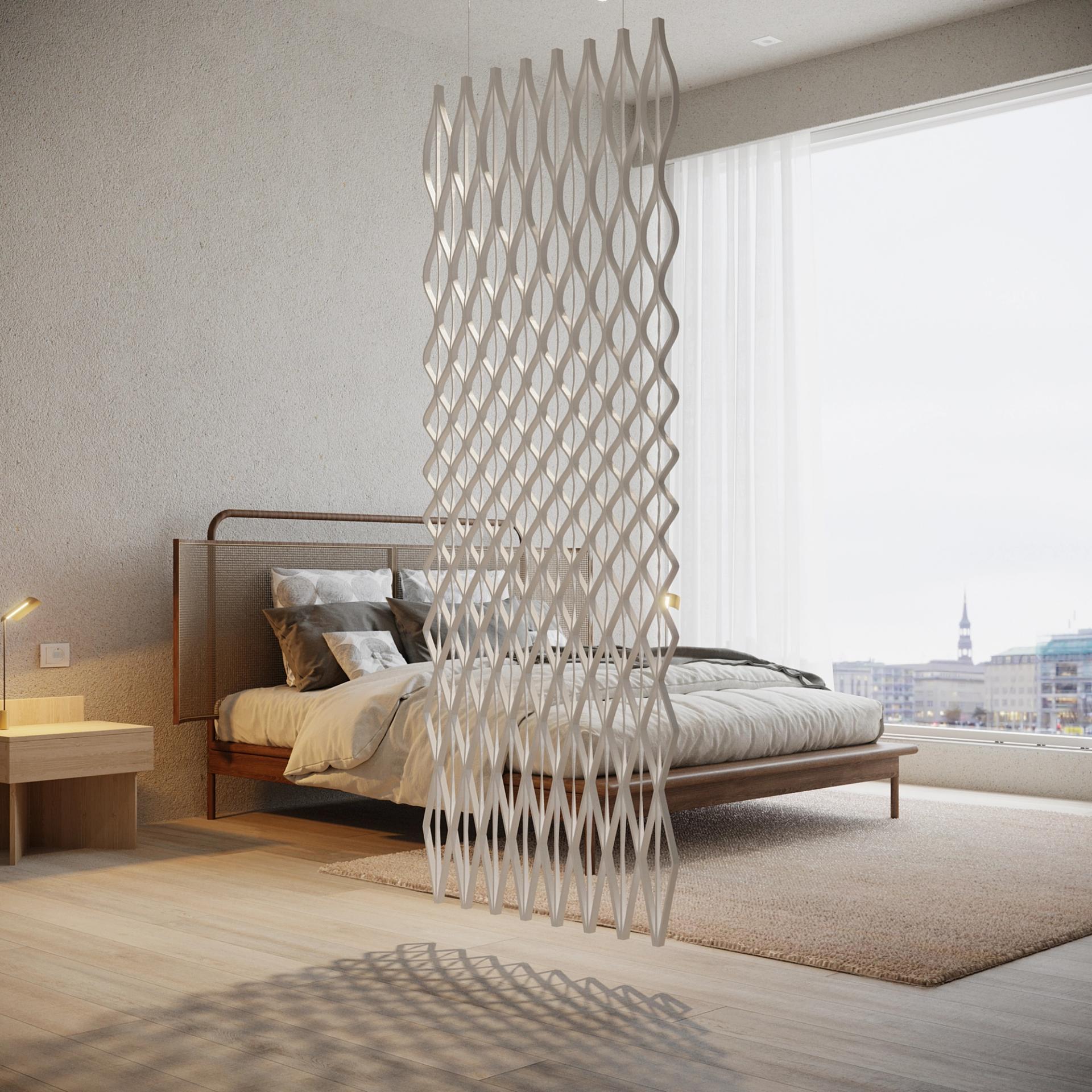
Aectual combines digital design, material innovation and large-scale robotic 3D printing to produce customized architectural products from recycled waste.
The process is digital and automated, allowing us to produce at scale without production waste. After use, products can be taken back, shredded and printed into new interiors, again and again.
This effectively turns buildings into material banks: the interior of today becomes the raw material for what comes next. Across our applications, this approach achieves at least 80% CO₂ reduction per cycle compared with conventional alternatives.
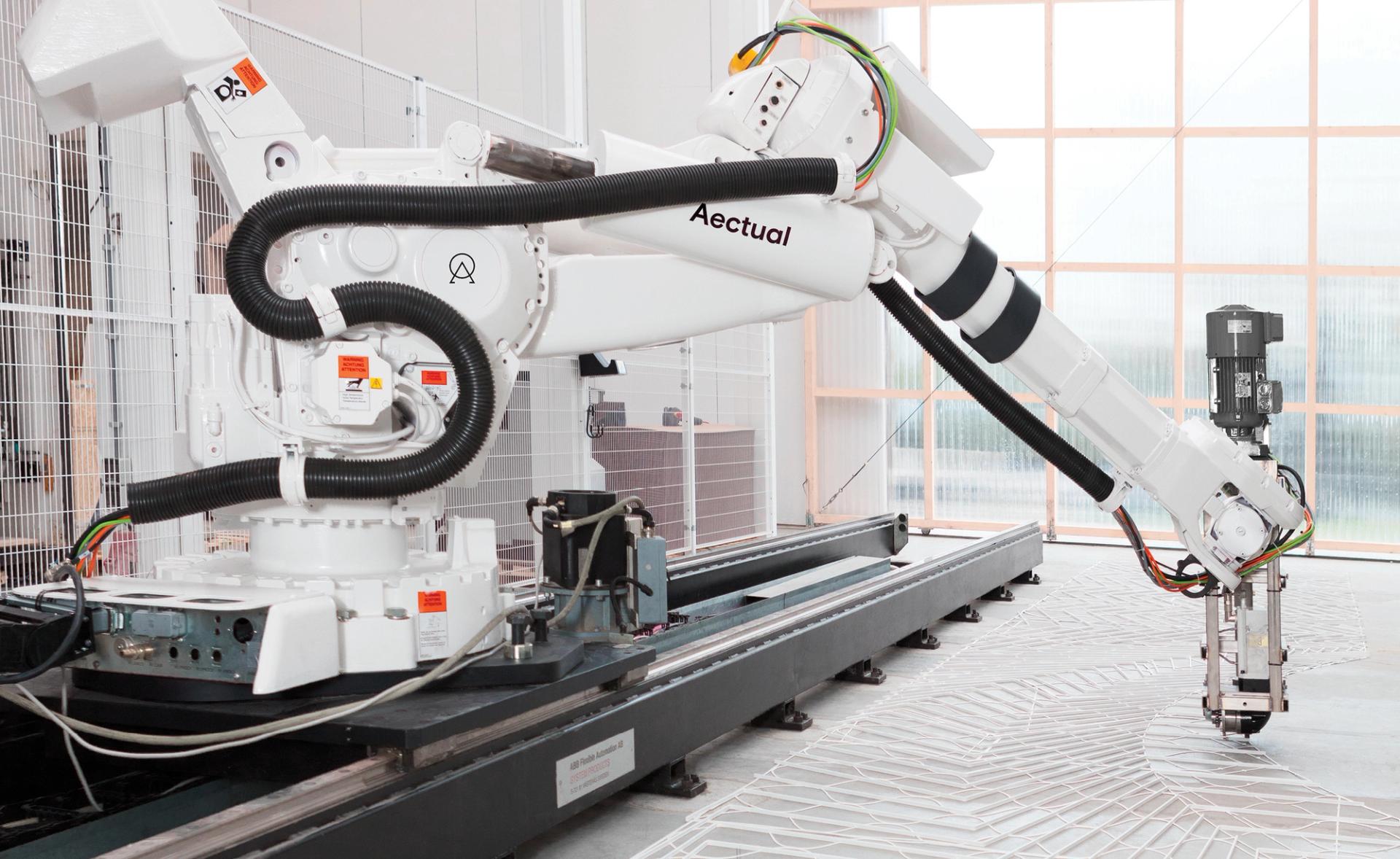
From corporate waste to new interiors
Our collaboration with Tetra Pak is one example of how this model works in practice.
Together, we developed a 3D-printable material from recycled beverage cartons. Aectual is using it to create interiors for Tetra Pak’s 160 offices worldwide, while the same material is now moving into other commercial projects.
It demonstrates the potential of the model: one waste stream can become a new material, many different products and ultimately a new circular value chain.
And the same approach can be applied to other corporate waste streams. Companies can bring us their waste and turn it into new materials for their own offices, stores or other spaces, while keeping those materials in circulation for future uses.
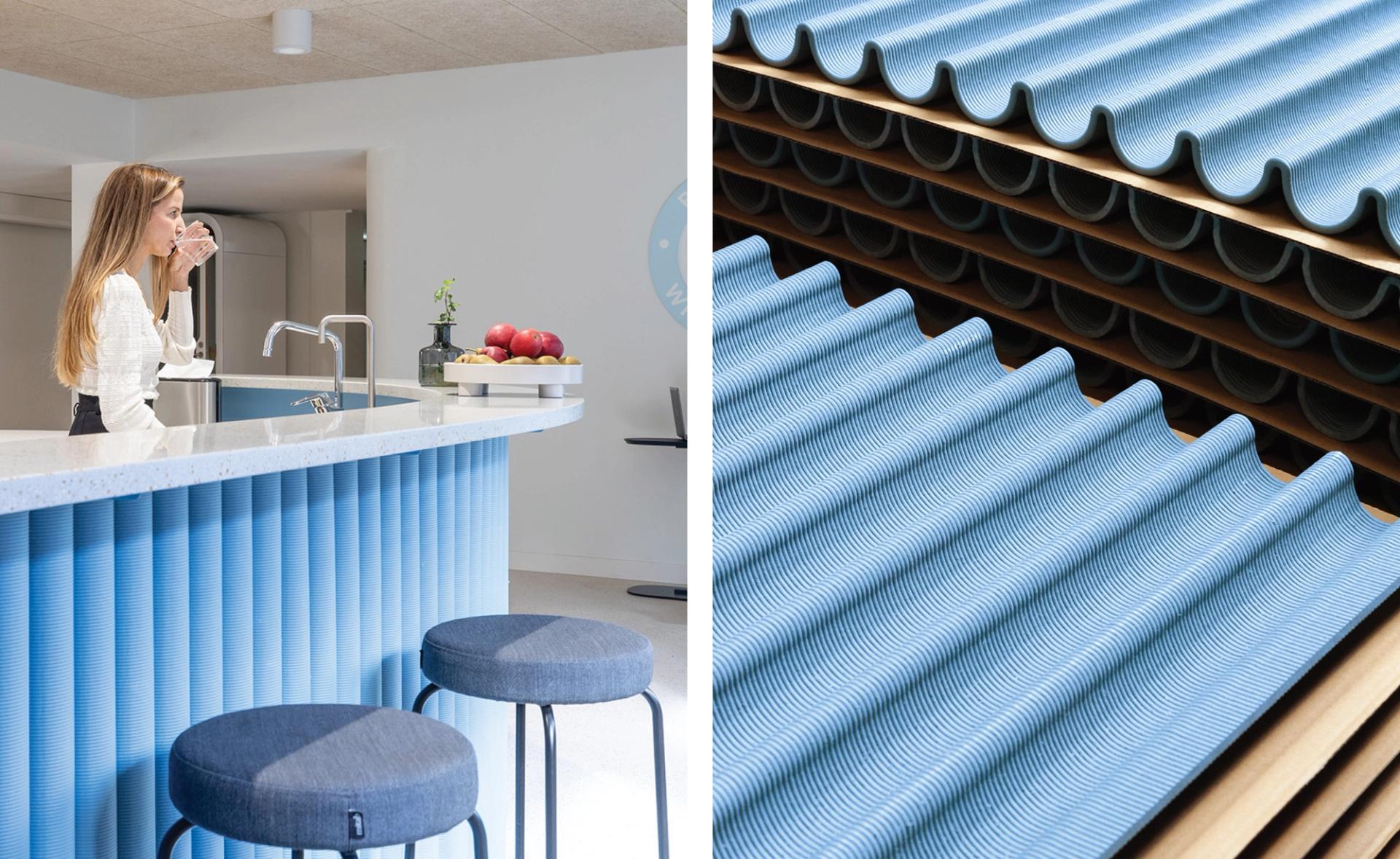
Circular architecture at scale
Aectual delivers circular architectural products globally, from ceilings and wall panels to façades, furniture and planters. With a digital platform connecting design, materials and production, the model can expand across products, applications and locations.
For Aectual, the WEF recognition is an important step towards scaling this system: connecting more waste streams, more buildings and more production capacity.
We are proud to join fellow challenge winners AtmosZero, Bioforcetech, Concular, Glassdome, Green Li-ion, Hullbot, KALTANI, Material Evolution, MYCL, Rarearth and Shellworks.
A big thank you to UpLink and the World Economic Forum for the recognition, and for the many conversations and new connections throughout Climate Week.
Want to explore what Aectual could do for your interior, or your waste stream?
Get in touch at [email protected].